MAKHADO, LIMPOPO — The treacherous N1 highway in South Africa’s Limpopo province has once again become a site of mourning and carnage. In the early hours of Thursday morning, a cross-border bus ferrying passengers from the bustling streets of Gauteng towards the Zimbabwean border lost control and plunged into a deep cliff near Ingwe Lodge, just outside Makhado. The disaster has claimed at least five lives, while 60 others have been left with injuries ranging from minor to life-threatening.
The scene, located near the notorious Ingwe Lodge, is a hauntingly familiar one for rescue workers and local residents. It is the exact same location where, in October last year, a similar tragedy snuffed out the lives of 36 Zimbabweans and eight Malawians. For the families of the deceased and the survivors of this latest incident, the N1 has transformed from a vital economic artery into a corridor of dread.
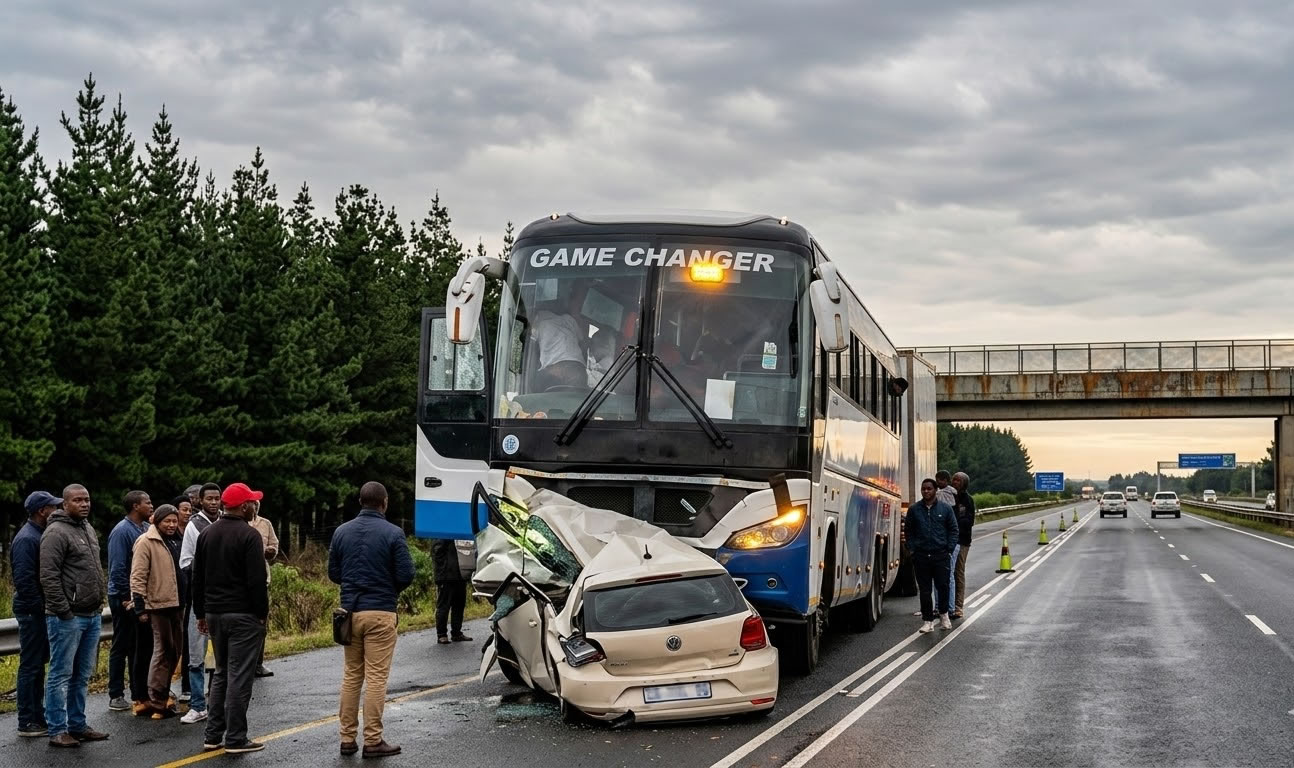
According to preliminary reports from South Africa’s Department of Transport and Community Safety, the bus was travelling northwards when the driver apparently lost control. The vehicle veered off the road, careening down a steep embankment before coming to a rest in a ditch at the bottom of a cliff. The impact was catastrophic, leaving the bus severely mangled and trapping dozens of passengers within the wreckage.
“A bus carrying passengers lost control and fell into a ditch in the area,” the Department of Transport and Community Safety confirmed in an official statement released shortly after the incident. “At this stage, the exact cause of the accident remains unknown. However, it is clear that there are multiple fatalities and injuries. A competent authority will confirm the numbers in due course.”
As the sun rose over the Limpopo landscape, rescue teams were still battling to reach those trapped inside the vehicle. The rugged terrain and the precarious position of the bus made the operation exceptionally difficult. Emergency services, including paramedics and heavy-duty recovery teams, worked tirelessly throughout the morning, while the N1 highway was closed to traffic, forcing motorists to take lengthy detours through the R523 road via Nzhelele.
Ms Violet Mathye, the Limpopo Member of Executive Committee (MEC) for Transport and Community Safety, arrived at the scene on Thursday morning to oversee the rescue efforts and offer condolences to the victims. Her presence underscored the gravity of the situation and the growing pressure on authorities to address the recurring nature of these accidents.
“The vehicle remains in the ditch, making it difficult to determine the exact number of occupants at the time of the incident,” the department added. While the bus was confirmed to be travelling from Gauteng to Zimbabwe, authorities are still working to establish the nationalities of all the passengers, though it is feared that the majority are Zimbabwean nationals returning home or travelling for trade.
This latest incident is not an isolated tragedy but part of a grim pattern that has plagued the cross-border transport sector for years. The N1 highway, particularly the stretch through the Soutpansberg mountains near Makhado, is notorious for its steep gradients and sharp bends. When combined with factors such as driver fatigue, overloading, and poorly maintained vehicles, it becomes a recipe for disaster.
In December last year, during the height of the festive season travel, cross-border bus operators were already under intense scrutiny. Reports from News24 highlighted that overloading and the poor condition of vehicles remained major safety risks. Despite increased police presence and roadblocks, the allure of higher profits often leads operators to bypass safety regulations, cramming passengers and heavy luggage into buses that are ill-equipped for the long and demanding journey between Johannesburg and Harare.
The October 2024 accident at the same spot remains a fresh wound for the region. In that incident, 44 people lost their lives when a bus similarly plunged off the road. The recurring nature of these crashes at the exact same location has led to calls for urgent infrastructural interventions, such as improved barriers or clearer warning signs, as well as more stringent enforcement of resting periods for long-haul drivers.
Furthermore, the cross-border transport industry has been shadowed by other controversies. In October 2025, South African cabinet officials flagged a bus accident as a potential cover for pharmaceutical smuggling after large quantities of medication were discovered at a crash site. This has added another layer of complexity to the oversight of these vehicles, as authorities must balance safety inspections with the need to curb illegal trade.
For the survivors of Thursday’s crash, the physical injuries are only part of the trauma. Many cross-border travellers are informal traders or migrant workers who rely on these buses as their only affordable means of transport. The loss of their goods, documents, and livelihoods in such accidents often leaves them in a state of total desperation.
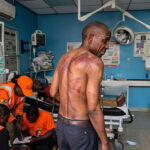
As of Thursday afternoon, 60 passengers were being treated at various hospitals in the Limpopo province, including Louis Trichardt Memorial Hospital and Elim Hospital. Medical staff have been working around the clock to stabilise the injured, some of whom were airlifted from the scene due to the severity of their wounds.
The Zimbabwean Embassy in Pretoria is expected to work closely with South African authorities to identify the deceased and facilitate the repatriation of their remains. For many families in Zimbabwe, the wait for news is agonizing, as they fear the worst for their loved ones who were on the journey home.
The cause of this latest crash remains under investigation. While mechanical failure or driver error are often the primary suspects, the role of the road’s design cannot be ignored. The “Ingwe Lodge” stretch has now claimed scores of lives in less than two years, making it one of the deadliest points on the Great North Road.
As the wreckage is eventually cleared and the N1 reopened, the questions will remain. How many more lives must be lost before definitive action is taken? The cross-border bus industry remains a lifeline for millions, but without a radical shift in safety culture and regulatory oversight, it continues to be a journey fraught with peril.
“It is clear that there are multiple fatalities and injuries,” the department’s spokesperson reiterated, a somber reminder of the human cost of a transport system that is currently failing its most vulnerable users. For now, the focus remains on the survivors and the families of those who will never complete their journey home.
The Deadly Pattern: Cross-Border Bus Safety Under the Microscope
The recurrence of bus disasters on the N1 highway is not merely a series of unfortunate events but a systemic failure that has long been overlooked. Investigative journalists and safety experts have consistently pointed to a combination of factors that turn these long-haul journeys into potential death traps.
In October 2024, at the very same location near Ingwe Lodge, a bus carrying 36 Zimbabweans and eight Malawians met its tragic end. The parallels between that incident and the one on Thursday are striking: a loss of control, a plunge into a cliff, and a devastating loss of life. For many, the question is no longer why these accidents happen, but why they are allowed to continue at the exact same spots.
One of the most significant issues is the physical condition of the buses themselves. Many cross-border operators use older models that have been repurposed for long-distance travel. These vehicles often lack modern safety features such as electronic stability control or advanced braking systems. Furthermore, the practice of overloading is rampant. Passengers often travel with large quantities of goods—groceries, appliances, and trade items—which significantly shifts the vehicle’s centre of gravity, making it much harder to control on steep mountain passes.
“Festive journeys are under scrutiny as cross-border buses battle speed, fatigue, and overload,” a News24 report noted in December 2025. This warning came after several high-profile accidents during the holiday season. The pressure on drivers is immense; many are required to complete multiple trips between Johannesburg and Harare with minimal rest, leading to severe driver fatigue. In the early hours of the morning, when the latest accident occurred, fatigue is often at its peak, and reaction times are significantly slowed.
The Limpopo Department of Transport has also raised concerns about the role of illegal activities in these transport networks. In October 2025, a bus accident led to the discovery of large quantities of pharmaceuticals, prompting Cabinet to flag the cross-border bus sector as a potential conduit for smuggling. This adds another layer of risk, as operators may prioritize evading law enforcement over passenger safety, leading to high-speed chases or the use of unsafe alternative routes.
Moreover, the infrastructure on the N1 highway itself has been criticized. While the road is a major international route, certain sections, particularly those winding through the Soutpansberg mountains, are ill-equipped for the volume and type of traffic they carry. The lack of adequate run-off areas or more robust safety barriers means that any loss of control can quickly turn into a fatal plunge.
The human cost of these failures is immeasurable. For the 60 survivors currently being treated in Limpopo hospitals, the road to recovery will be long and arduous. Many have lost their only means of income, as their goods were destroyed in the crash. For the families of the five deceased, the loss is even more profound, as they must now navigate the complex and expensive process of repatriating their loved ones’ remains across an international border.
The Zimbabwean government, through its embassy in South Africa, has expressed its deepest condolences to the families of the victims. However, there is a growing call from the public for more than just words of sympathy. Activists are demanding that both the South African and Zimbabwean governments work together to enforce stricter safety standards, conduct more rigorous vehicle inspections, and ensure that drivers are given adequate rest.
As the investigation into Thursday’s crash continues, the wreckage at the bottom of the Ingwe Lodge cliff serves as a grim monument to a transport system in crisis. The N1 highway remains open, and more buses will undoubtedly pass that same spot tonight, carrying hundreds more passengers on the same perilous journey. Without immediate and decisive action, it is only a matter of time before the next tragedy unfolds on this deadly stretch of road.
“The vehicle remains in the ditch,” the Department of Transport and Community Safety stated, a metaphor for a safety system that seems equally stuck in a cycle of neglect and disaster. For the sake of the millions who rely on these cross-border lifelines, the time for change is long overdue.
A Legacy of Loss: The Long Shadow of the N1
To understand the magnitude of Thursday’s tragedy, one must look back at the long and bloody history of the N1 highway between Johannesburg and the Beitbridge border post. For decades, this road has been the primary link between South Africa and its northern neighbours, carrying millions of tonnes of freight and hundreds of thousands of passengers every year. Yet, it remains one of the most dangerous stretches of tarmac in sub-Saharan Africa.
The October 2024 accident, which killed 44 people at the same spot, was supposed to be a wake-up call. At the time, government officials promised a thorough review of safety protocols and a crackdown on rogue bus operators. Transport Minister at the time had stated, “We cannot continue to lose lives in such a manner. The safety of our people is paramount, and we will ensure that those responsible for this negligence are held accountable.” However, as the dust settles on this latest crash, those words ring hollow for the survivors.
One of the survivors of the 2024 crash, who spoke on condition of anonymity, described the experience as a “nightmare that never ends.” They recalled the terrifying moments as the bus veered off the road, the screams of fellow passengers, and the long wait for rescue in the darkness. “I still can’t sleep at night,” they said. “Every time I hear a loud noise, I am back in that ditch. Seeing it happen again at the same place makes me feel like our lives don’t matter to the people in charge.”
The economic pressures that drive these accidents are also a critical factor. For many Zimbabweans, the trip to South Africa is a necessity, not a choice. With the economic situation in Zimbabwe remaining challenging, many travel to Gauteng to buy goods for resale or to work in the informal sector. These travellers are often on a tight budget and will opt for the cheapest possible transport, which often means using operators who cut corners on safety.
“The bus companies know we have no other choice,” said a regular cross-border traveller at the Park Station bus terminal in Johannesburg. “They load the buses until there is no space to move. Sometimes you are sitting on your own bags for 12 hours. We know it’s dangerous, but what can we do? We have families to feed.”
The Regulatory Void: Who is Responsible?
The question of accountability remains a thorny one. Cross-border transport is governed by a complex set of regulations involving multiple agencies in both South Africa and Zimbabwe. The Cross-Border Road Transport Agency (C-BRTA) is responsible for issuing permits and ensuring compliance with safety standards. However, critics argue that the agency is under-resourced and unable to effectively monitor the thousands of buses that cross the border every week.
In recent years, there have been reports of corruption at border posts and along the N1, where bus drivers allegedly pay bribes to bypass weighbridges or avoid inspections. This culture of impunity allows unsafe vehicles to remain on the road, putting thousands of lives at risk every day.
“We need a total overhaul of how we manage cross-border transport,” says Dr. Sipho Mncube, a transport logistics expert. “It’s not enough to just have roadblocks. We need real-time monitoring of vehicles, stricter enforcement of driver rest periods, and a zero-tolerance approach to corruption. Until the cost of breaking the law is higher than the profit from overloading, nothing will change.”
The Limpopo provincial government has also been under fire for the state of the roads. While the N1 is a national road managed by SANRAL, the provincial authorities are responsible for emergency response and traffic policing. The recurring accidents at Ingwe Lodge have led to suggestions that the road’s geometry in that section needs to be re-evaluated. Some engineers have suggested that a dedicated truck and bus lane with a lower speed limit and more robust barriers could prevent vehicles from plunging into the cliff.
A Call for Regional Cooperation
The cross-border nature of these accidents also highlights the need for better regional cooperation. The Southern African Development Community (SADC) has long had a protocol on transport, communications, and meteorology, which aims to harmonize transport regulations across the region. However, implementation has been slow, and significant differences remain in how South Africa and Zimbabwe enforce safety standards.
“This is a regional problem that requires a regional solution,” says an official from the SADC secretariat. “We need to share data on bus operators, synchronize our inspection regimes, and ensure that a bus that is deemed unsafe in one country is not allowed to operate in another. The lives of our citizens are at stake.”
As the families of the five Zimbabweans killed on Thursday begin the process of mourning, the broader community is left to grapple with the reality that this will likely not be the last such tragedy. The N1 continues to hum with the sound of engines, as more buses, heavily laden and filled with hopeful travellers, make their way towards the border.
For the 60 injured, the immediate concern is recovery. But for the millions who rely on these roads, the concern is survival. The “Ingwe Lodge” cliff remains a silent witness to the failures of a system that is meant to protect, but all too often, merely counts the dead.
“We are tired of burying our brothers and sisters,” said a representative of the Zimbabwean community in Limpopo. “We want action. We want to know that when we put our families on a bus, they will actually arrive at their destination. Is that too much to ask?”
As the investigation continues, the world watches to see if this latest tragedy will finally be the one that sparks real change, or if it will simply be another entry in the long list of avoidable disasters on the Great North Road.

Follow @MyZimbabweNews